





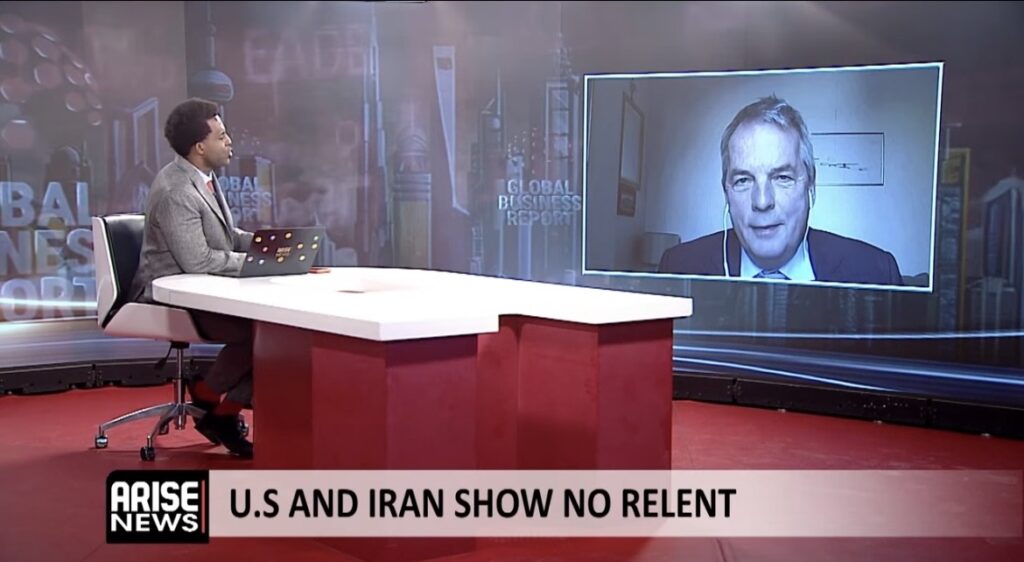
Christof Rühl, Global Advisor at Crystol Energy and Senior Research Scholar at Columbia University’s Center on Global Energy Policy, joined Rotus Oddiri on ARISE News to discuss the Iran conflict and its market impact. The conversation focused on war time signalling, US objectives, and the conditions that could turn market volatility into a real supply shock.
Key takeaways:
Iran’s public messaging looks mixed because different factions are signalling different priorities under intense pressure.
A decentralised security posture can increase unpredictability and raise the risk of uneven retaliation across the region.
US objectives were presented as broad and explicit, spanning nuclear constraints, ballistic missiles, and wider military capabilities.
The next major escalation risk sits around nuclear enrichment facilities, since further strikes there would reshape expectations fast.
Markets respond more to the risk of sustained physical disruption than to headlines, so uncertainty keeps a premium in prices.
Oil supply has short term buffers through alternative pipelines, regional storage in the Gulf, and strategic stocks in consuming countries.
LNG risk is more concentrated than oil risk because Qatar is a critical supplier, leaving parts of Asia more exposed if flows tighten.
Oil prices could drift toward 80 under persistent uncertainty, while a larger jump needs credible evidence of longer outages or major infrastructure damage.
Related Analysis
“Global oil market dynamics after U.S. intervention in Venezuela“, Dr Carole Nakhle, Jan 2026
Related Comments
“Venezuela, geopolitics, and what moves oil prices in 2026“, Dr Carole Nakhle, Jan 2026
“Can Trump really get Venezuela’s oil flowing again?“, Dr Carole Nakhle, Jan 2026