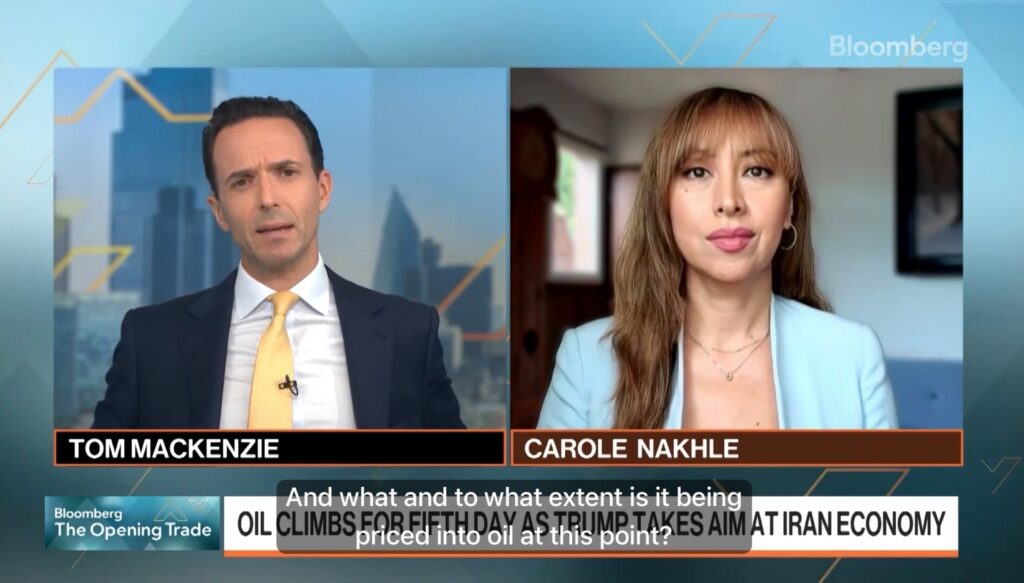





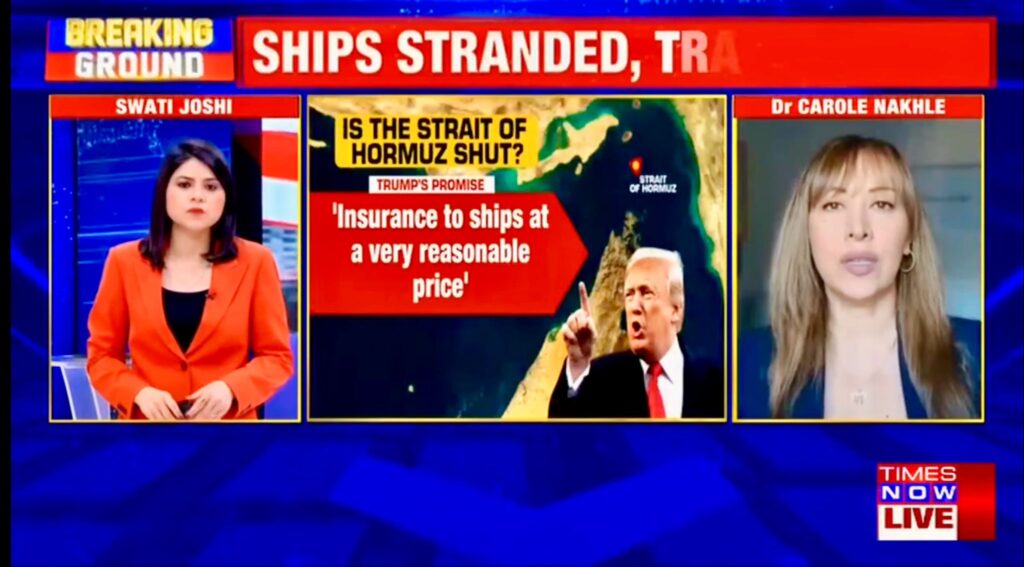
In an interview with Times Now, Dr. Carole Nakhle, CEO of Crystol Energy, discussed how the escalating conflict in the Middle East is affecting oil prices, tanker traffic, insurance costs, and global energy security. She explained that the crisis is already having serious consequences for trade, inflation, and importing countries, but stressed that the market is not yet facing the worst case scenario. That would come if attacks spread further, more energy infrastructure is hit, and Gulf producers become directly involved in the war.
Key takeaways:
The crisis is already affecting far more than oil prices. It is also creating wider risks for trade, inflation, shipping, and global economic stability.
This is a full energy crisis, but it is not yet the worst case scenario. The most dangerous outcome would be a deeper escalation that damages more infrastructure and draws Gulf countries directly into the war.
Oil prices were already rising before the war began because of the US military buildup in the region. The outbreak of conflict then pushed prices higher and kept them above pre war levels.
Prices are still below the levels seen in past major shocks such as 2022, which suggests the market believes the worst supply disruption has not happened yet.
The key risk is not only whether the Strait of Hormuz is physically closed. Fear, missiles, drones, and the lack of insurance can by themselves slow or stop tanker traffic.
Promises of military escorts and political risk insurance may help calm the market, but they will only matter once shipowners and captains feel safe enough to resume normal transit.
For major oil importers such as India, higher prices are the immediate challenge, but a lack of available oil is not yet the main concern because global markets were expecting surplus supply before the war.
Oil importers still have options to diversify supply, including drawing on barrels available in the market and, in a more severe scenario, relying on strategic petroleum reserves.
Gas markets are more difficult than oil markets to replace quickly, which makes disruption there harder to manage.
If the conflict escalates further and causes serious disruption to production and exports, oil prices will face stronger upward pressure and the crisis could become much more severe.
Related Comments
“Iran War: Asia most at risk in an LNG shortage“, Christof Rühl, Mar 2026
“US and Israel launch major military strikes on oil-rich Iran“, Dr Carole Nakhle, Feb 2026