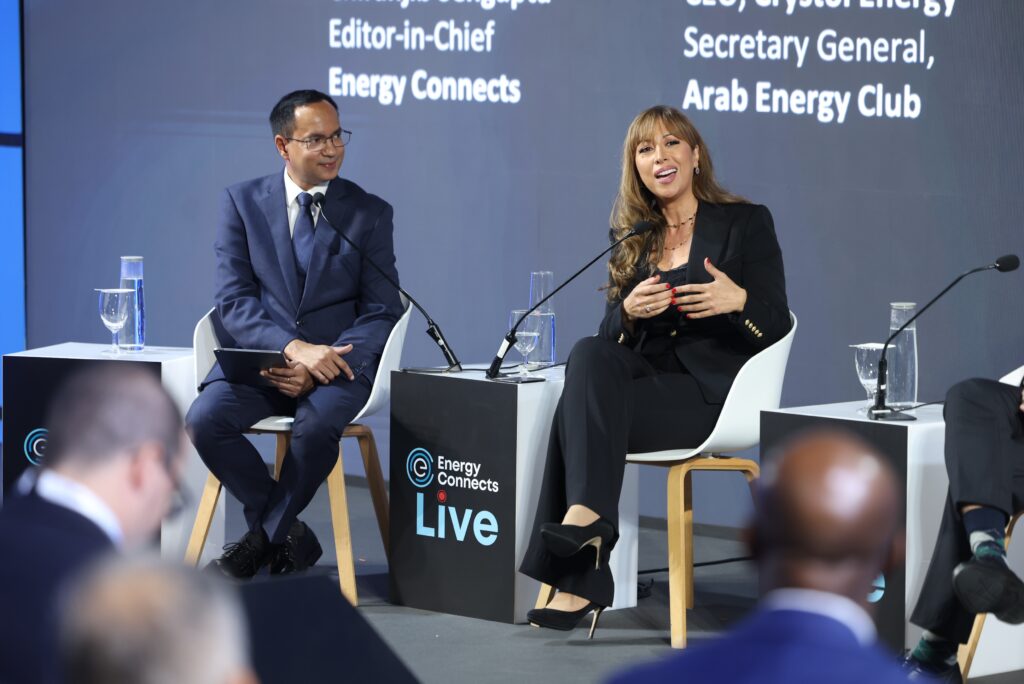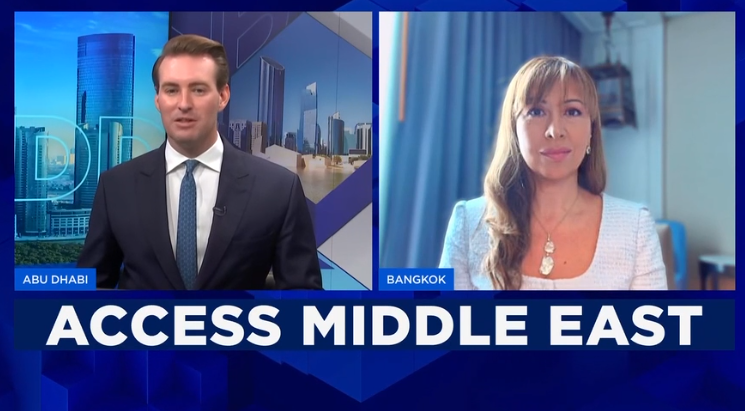






Following the UAE’s announcement on 28 April that it would leave OPEC – effective 1 May – Crystol Energy’s CEO, Dr Carole Nakhle, has provided expert commentary across a range of international media outlets on the implications of this development.
The following summarises the key points from her analysis:
Key insights
- A decision shaped over time
The UAE’s exit reflects a gradual divergence between its strategic objectives and the constraints of OPEC+, particularly in light of its sustained investment in expanding production capacity. - Underlying challenges within OPEC+
The development highlights ongoing issues within the group, including quota allocation, uneven compliance and differing national priorities. - Timing and immediate market impact
The timing of the announcement, amid the war involving Iran and disruption risks around the Strait of Hormuz, has limited its immediate effect on oil markets. In the near term, prices remain primarily driven by geopolitical factors. - Geopolitical considerations
The broader regional context is also relevant, with Iran – an OPEC member long exempt from quotas – at the centre of current tensions affecting fellow producers. - Implications for the UAE
As an independent producer, the UAE will have greater flexibility to align its production strategy with its national economic objectives. - Implications for OPEC
While OPEC has previously adapted to changes in membership, this development underscores structural challenges that are becoming more pronounced. - Outlook
The longer-term implications will depend on how the UAE positions itself outside OPEC and how this interacts with wider market dynamics.
Selected media coverage
Dr Carole Nakhle has been quoted in the following publications:
- “UAE exit from OPEC signals a weakening cartel that could push oil prices lower and hit Russia, experts tell The Insider”, The Insider
- “UAE’s exit from OPEC: What the strategic move means for oil markets”, L’Orient Le Jour
- “Sortie des Émirats arabes unis de l’OPEP : un choix stratégique aux effets différés”, L’Orient Le Jour (in French)
- “OPEC exit: Why the UAE is leaving and what it means”, Anadolou Agency
- “Analysis: Too early to assess impact of UAE’s OPEC exit on energy equities, risk premium”, Zawya
- “Brent over $120 as markets see no quick end to war”, Arabian Gulf Business Insight
- “Carole Nakhle on “K”: Change of scenery in OPEC after the UAE’s exit”, Kathimerini (in Greek)
Related Comments
“The Saudi oil pipeline the world didn’t know it needed“, Dr Carole Nakhle, Mar 2026
“US eases sanctions on Russian oil amid energy crisis sparked by Iran conflict“, Christof Rühl, Mar 2026
“War puts key Iranian oil terminals at risk“, Dr Carole Nakhle, Mar 2026