


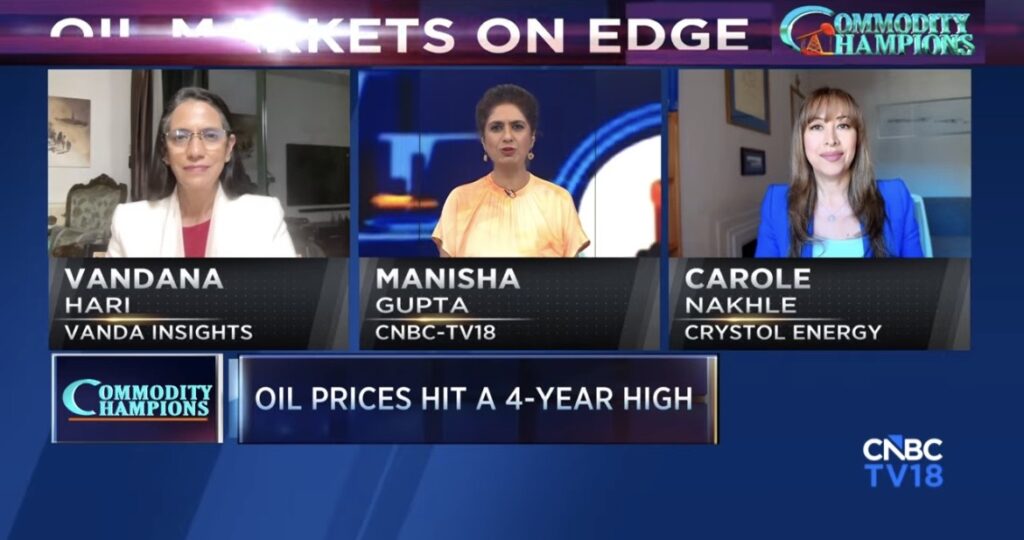
Dr. Carole Nakhle, CEO of Crystol Energy, joined CNBC TV18’s Commodity Champions to discuss the surge in crude oil prices amid escalating tensions around the Strait of Hormuz. In the interview, Dr. Nakhle explained that current oil price movements are being driven mainly by politics rather than fundamentals. She noted that while some supplies are being redirected through alternative routes, the continued escalation between Tehran and Washington is keeping markets nervous.
Key takeaways:
Oil markets are carrying a strong geopolitical premium as tensions around the Strait of Hormuz continue.
Alternative export routes from Saudi Arabia and the UAE can help ease some pressure, but they cannot fully remove market anxiety.
The United States may tolerate higher oil prices for longer because it is the world’s largest oil producer and a major exporter.
The longer the standoff continues, the greater the risk of deeper economic pressure on oil importing countries.
Oil markets usually adjust after crises, but high prices can also cause lasting demand destruction.
A prolonged disruption could reshape market dynamics beyond the immediate crisis.
- The UAE’s exit from OPEC signals a broader shift in market dynamics and highlights the need to focus on demand alongside supply.
Related Analysis
“Crisis without collapse: The Middle East oil shock“, Dr Carole Nakhle, Apr 2026
Related Comments
“What measures could EU countries consider to reduce fuel demand?“, Christof Rühl, Apr 2026
“War puts key Iranian oil terminals at risk“, Dr Carole Nakhle, Mar 2026