

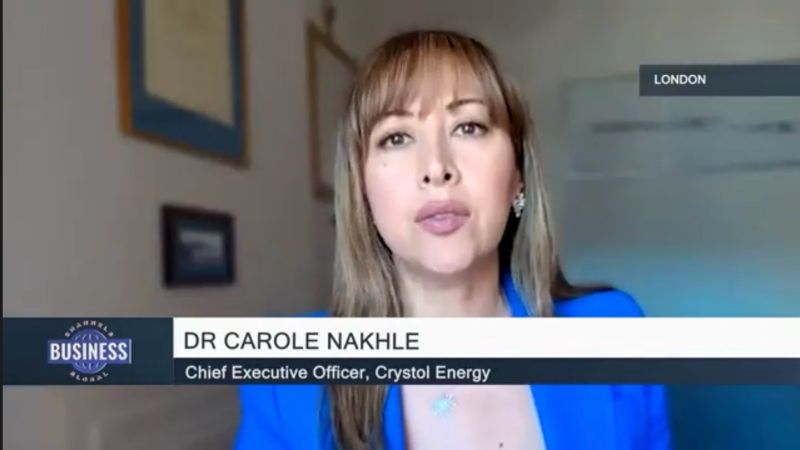
Dr. Carole Nakhle, CEO of Crystol Energy, joined Juliana Olayinka from Channels Business Global to discuss tensions around the Strait of Hormuz. She shared insights on how the crisis is shaping oil markets and affecting global and African economies.
Key takeaways:
Oil prices are reacting primarily to political uncertainty, with markets interpreting strong rhetoric as a risk of further escalation.
A credible reopening of the Strait of Hormuz requires a full return to safe and sustained shipping activity, not partial or inconsistent flows.
Even if the crisis persists, oil markets will eventually adjust, with structural changes shaping long term dynamics.
Higher prices could accelerate supply growth from outside the Middle East, including countries like Venezuela and parts of Africa.
Demand destruction can become permanent, especially as consumers shift toward alternatives such as electric vehicles.
African economies face uneven impacts, with exporters benefiting from higher prices while import dependent countries face greater economic strain.
High energy costs could deepen economic and social vulnerabilities in Africa if the crisis continues for an extended period.
While oil producers may benefit from higher revenues, the overall impact remains negative for consumers, especially in energy poor regions.
Related Analysis
“Crisis without collapse: The Middle East oil shock“, Dr Carole Nakhle, Apr 2026
Related Comments
“What measures could EU countries consider to reduce fuel demand?“, Christof Rühl, Apr 2026
“War puts key Iranian oil terminals at risk“, Dr Carole Nakhle, Mar 2026