






The Supreme Court of Ghana has handed down a landmark judgment confirming that Parliament-ratified petroleum agreements—and the fiscal stabilisation clauses they contain—override subsequent changes to national tax legislation.
To explain what a stabilisation clause is and why it matters, the Court quoted directly a 2016 study published by the Oxford Institute for Energy Studies, co-authored by Dr Carole Nakhle (CEO, Crystol Energy) and Dr Mario Mansour (Division Chief, IMF Fiscal Affairs). The paper defines a stabilisation clause as “a contractual risk-mitigating device to protect investments from variations in the legal environment. This would include risks deriving from a possible exercise of host state sovereignty such as: expropriation, the obsolescence bargain, or any other change which the government might utilize in order to impose new requirements on investors.”
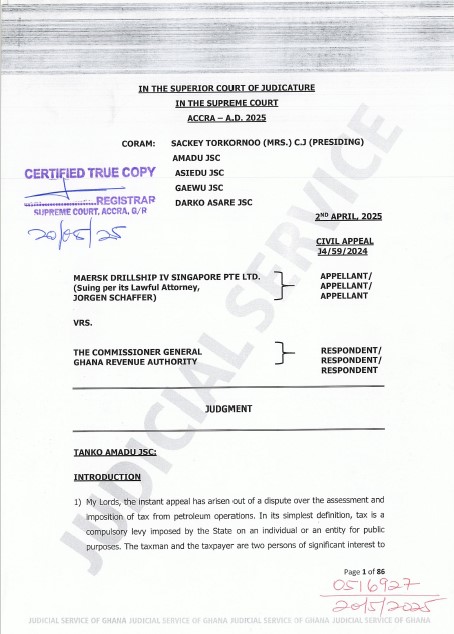
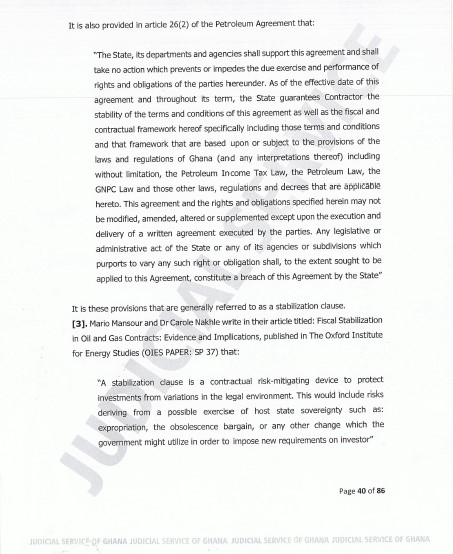
This citation cements the paper’s status as a go-to reference for policymakers, counsel and investors drafting or renegotiating petroleum agreements worldwide.
Key takeaways from the cited paper:
- Freeze clauses often melt: Absolute “tax-freeze” promises seldom survive long in practice.
- Share-the-gain works—if trusted: Symmetric, outcome-based clauses can benefit both sides (government and investor) when legal institutions are credible.
- Built-in flex beats fine print: Progressive tax regimes that auto-adjust with oil price fluctuations provide steadier certainty than pages of legal wording.
- Simple rules, few changes: One transparent model and minimal tinkering best preserve investor confidence and national competitiveness.
Dr Carole Nakhle drilled into these themes in an Extractives Hub webinar, joined by Professor Peter Cameron — Professor of International Energy Law & Policy and Director of CEPMLP — and Dr Victoria R. Nalule, CEO of Nalule Energy & Minerals Consultants (NEM Energy). Together they contrasted host-government and IOC views on stabilisation clauses, weighed their real-world effectiveness, and shared negotiation tactics for tougher contracts. Watch the full discussion in the video below.