



Africa holds substantial natural gas resources, yet unreliable and costly energy supplies continue to constrain industrial development across much of the continent. Bridging this gap requires investment in infrastructure, commercially viable domestic gas markets and policies that enable energy resources to support productive economic activity.
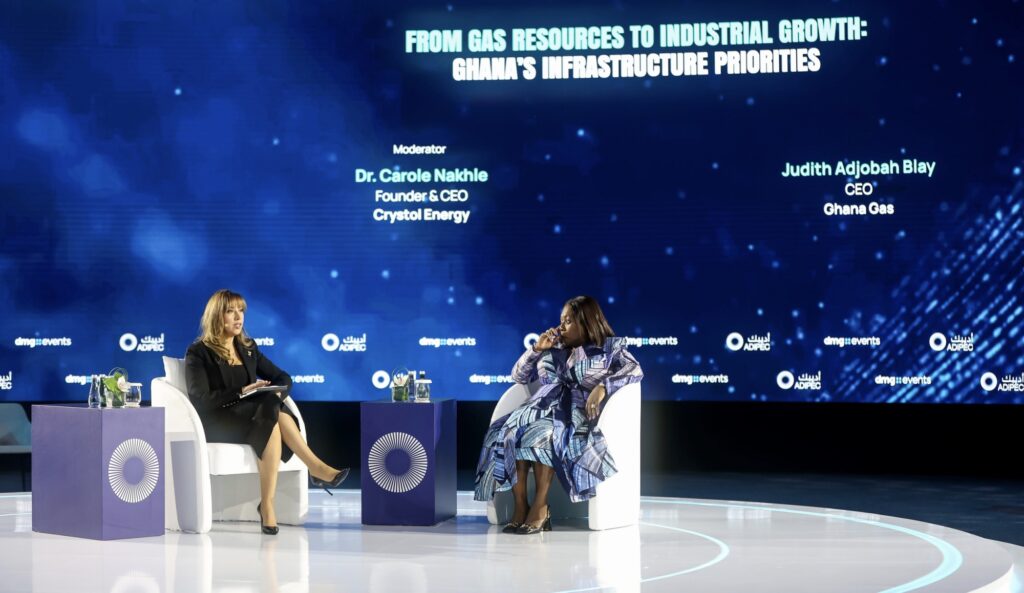
At ADIPEC 2026, Dr. Carole Nakhle, Founder and CEO of Crystol Energy, explored these challenges in a leadership interview with Judith Adjobah Blay, CEO of Ghana Gas, focusing on Ghana’s infrastructure priorities and the role of natural gas in supporting industrial growth.
Key Insights
1. Gas resources alone do not guarantee industrial development
The economic benefits of domestic gas depend on the ability to deliver reliable supplies to power producers and industrial consumers at competitive prices. Processing facilities, transportation networks and connections to end-users are critical to translating resource availability into industrial activity.
2. Commercial viability is central to infrastructure investment
Gas infrastructure requires substantial upfront capital and long-term commitments. Gas pricing, financially viable customers, credible demand and appropriate commercial arrangements influence investment decisions. Weaknesses in any of these areas can delay infrastructure development, even where substantial gas resources are available.
3. Gas utilisation can strengthen industrial competitiveness
Reliable and competitively priced gas can support electricity generation, provide fuel and feedstock for manufacturing, and encourage investment in energy-intensive industries. For Ghana, expanding domestic gas utilisation offers opportunities to strengthen local value chains, create employment and reduce constraints on industrial growth.
4. Reducing gas flaring offers economic as well as environmental benefits
Ghana has set an ambitious target to eliminate routine gas flaring from its oil fields by 2026, ahead of the international 2030 target. Ghana Gas is also pursuing opportunities to recover and commercialise products that would otherwise be flared. Capturing these resources can reduce emissions and waste while generating additional revenues and potentially increasing the availability of energy for productive uses.
5. Ghana’s experience has wider implications for Africa
Across resource-rich African economies, the contribution of natural gas to industrialisation will depend on infrastructure development, investment conditions, effective institutions and the growth of commercially sustainable domestic markets. Ghana’s experience illustrates the opportunities and practical challenges involved in converting natural gas resources into broader economic benefits.
Looking ahead
Africa’s industrial ambitions will require reliable, affordable energy alongside sustained investment in infrastructure and productive capacity. Domestic natural gas can contribute to these objectives where resources, markets and investment are effectively connected.
Related Comments
“Strait of Hormuz crisis exposes new risks to energy infrastructure“, Dr Carole Nakhle, Aug 2026
“UAE will double oil export capacity bypassing Hormuz by 2027“, Dr Carole Nakhle, May 2026