



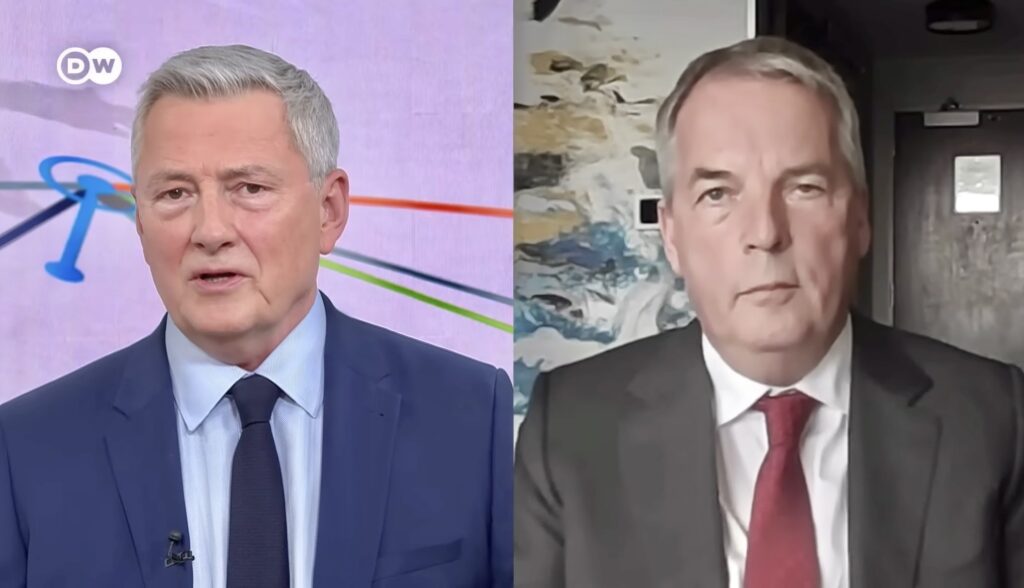
In an interview with DW News, Christof Rühl, Global Advisor at Crystol Energy, discussed how the war on Iran is affecting global energy markets and why the current shock, while serious, has not yet reached the scale of the worst historical crises. He explained that markets remain under pressure from uncertainty around the Strait of Hormuz, risks to production facilities, and the broader impact of higher energy prices on vulnerable economies.
Key takeaways:
The current energy shock is serious, but it has not yet reached the scale of the most severe oil crises seen in past decades.
If tensions eased quickly and no further damage was done to production facilities, oil markets could recover without lasting structural harm.
The Strait of Hormuz remains one of the world’s most important chokepoints, and any prolonged disruption there could push the crisis into far more dangerous territory.
The effects of the crisis were foreseeable, especially given the central role of Hormuz in global oil flows and energy security.
Gas markets have also been affected, but disruptions so far remain smaller than the shock Europe experienced in 2022 after Russian supply cuts.
Russia has emerged as the clearest short term winner, benefiting from higher oil prices and the redirection of its crude exports to major buyers such as China and India.
The biggest losers are poorer energy importing countries, especially those that depend heavily on oil and gas imports and have limited ability to absorb higher costs.
Highly industrialized Asian economies such as Japan, South Korea, and Taiwan also face significant risks because of their import dependence and the importance of their industrial output.
Even the United States, despite being a major oil and gas producer, remains exposed to higher global energy prices because oil markets are globally connected.
Rising fuel prices may also create political pressure in the United States, where gasoline prices remain a sensitive issue for voters and policymakers.
Related Comments
“US eases sanctions on Russian oil amid energy crisis sparked by Iran conflict“, Christof Rühl, Mar 2026
“War puts key Iranian oil terminals at risk“, Dr Carole Nakhle, Mar 2026