

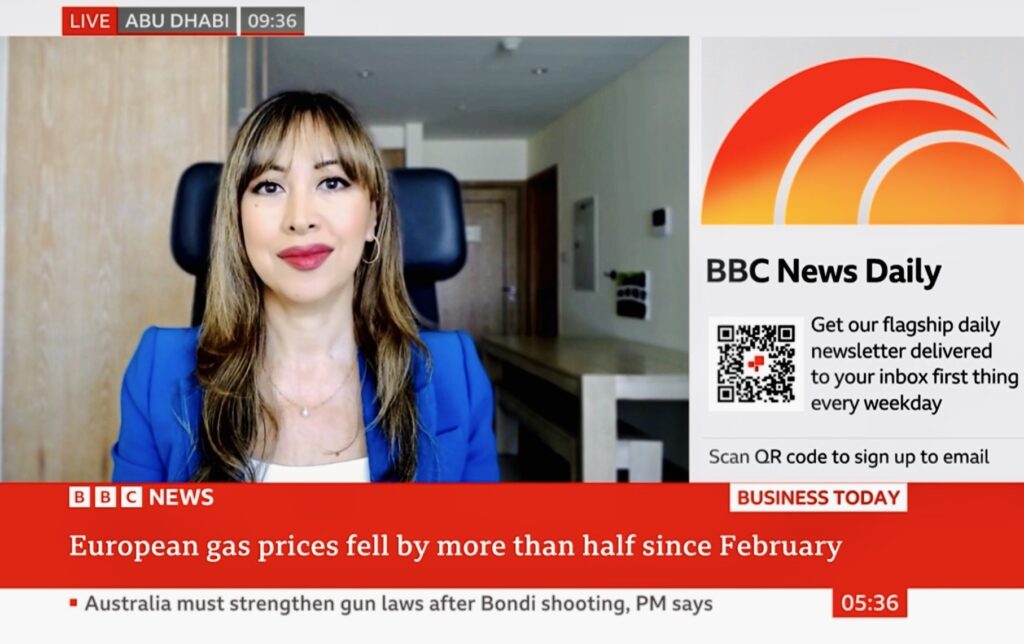
In a BBC World News interview, Dr Carole Nakhle, CEO of Crystol Energy, discussed why Europe is accelerating plans to modernise and expand its power grids, as electrification gathers pace and energy security remains a central policy concern. She also explained how the structural shift away from piped Russian gas has reshaped Europe’s gas system, strengthening resilience through diversification while exposing consumers to higher volatility.
Key takeaways:
Europe’s grid is being pushed beyond its original design as electricity demand rises across transport, heating, and industry.
A more renewables heavy system makes supply more dispersed and variable, which raises the need for flexibility and stronger system management.
The Spain and Portugal blackout earlier this year highlighted how ageing infrastructure and weak interconnections can become a systemic risk.
Grid modernisation is about digitising and reinforcing existing networks using smart technologies, real time monitoring, and cyber secure systems.
Grid expansion means building more physical connections, especially cross border interconnectors, so power can flow from surplus regions to deficit regions.
Delivery will depend on faster permitting, stronger coordination across countries, and large scale investment in grids, storage, and flexibility.
The EU’s grids push aims to turn electricity networks from a bottleneck into an enabler of a greener, electrified economy.
The move away from Russian gas is structural, shifting Europe from reliance on one dominant supplier to a more diversified mix.
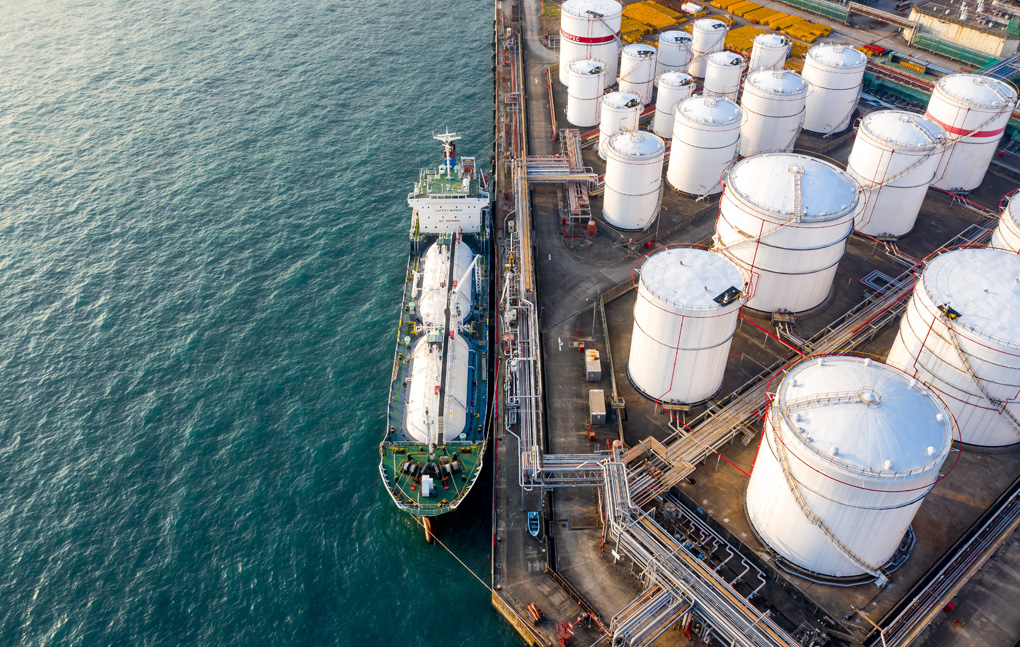
Europe now combines pipeline gas from Norway with LNG imports, mainly from the United States and Qatar, which strengthens security of supply.
This diversification can come with higher costs at times and greater price volatility, depending on market conditions.
A new wave of LNG supply expected in coming years could ease pressure on prices over time.
Related Comments
“OPEC reality check and shifting oil narratives“, Dr Carole Nakhle, Nov 2025
“China oil stockpiling and global energy security“, Dr Carole Nakhle, Nov 2025