




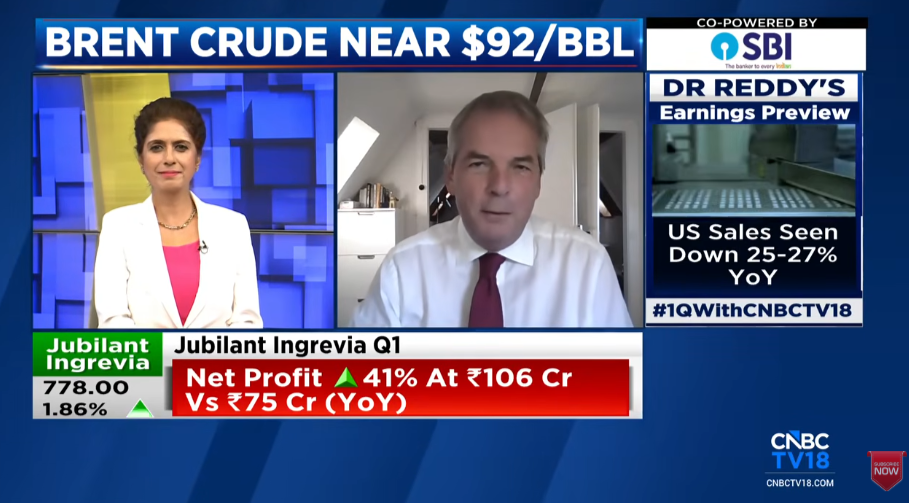
In an interview with Manisha Gupta on CNBC-TV18, Christof Rühl, Global Advisor at Crystol Energy, discussed why oil markets have absorbed recent disruptions better than expected, while warning that lasting damage to pipelines and other infrastructure could create a much more serious threat.
Key takeaways:
- Oil markets have faced repeated blockades, threats and disruptions before, but the current situation could become more serious if the conflict moves beyond temporary interference with shipping and begins to affect overland pipelines.
- Recent disruptions have been contained by available inventories and ample supply, which prevented prices from rising as sharply as many analysts expected. At the same time, oil has become less important to global economic output.
- The amount of oil needed to generate economic activity has fallen by around 60% since the 1970s. As a result, prices would need to rise much further than before to cause the same level of economic damage.
- Prices may need to move well above $100 per barrel before creating serious economic disruption. However, this resilience would offer limited protection if physical infrastructure were damaged for an extended period.
- Lasting attacks on pipelines would be more difficult to manage than temporary disruptions in the Strait of Hormuz. Prolonged outages could drain inventories that are already lower than during previous periods of market stress.
- The limited economic impact of earlier disruptions may encourage governments to take greater risks. This could lead political leaders to push the market’s ability to absorb shocks further than before.
- China remains the largest uncertainty in the market, as its lower imports may reflect the use of strategic reserves rather than weaker demand. These stocks will eventually need to be rebuilt, although China may wait for significantly lower prices before doing so.
- The United States faces a more sensitive situation because its Strategic Petroleum Reserve is publicly visible and remains at low levels. Oil prices could therefore begin shaping political decisions, rather than simply reacting to them.
- Risks now extend beyond the Strait of Hormuz to the Red Sea, Bab el-Mandeb and the wider pipeline network. While modern oil markets remain flexible, continued escalation could eventually push that resilience beyond its limits.
Related Analysis
“Crisis without collapse: The Middle East oil shock“, Dr Carole Nakhle, Apr 2026
Related Comments
“Pace of oil supply recovery in focus amid US-Iran deal“, Dr Carole Nakhle, Jun 2026
“What is driving oil price volatility?“, Dr Carole Nakhle, Jun 2026