

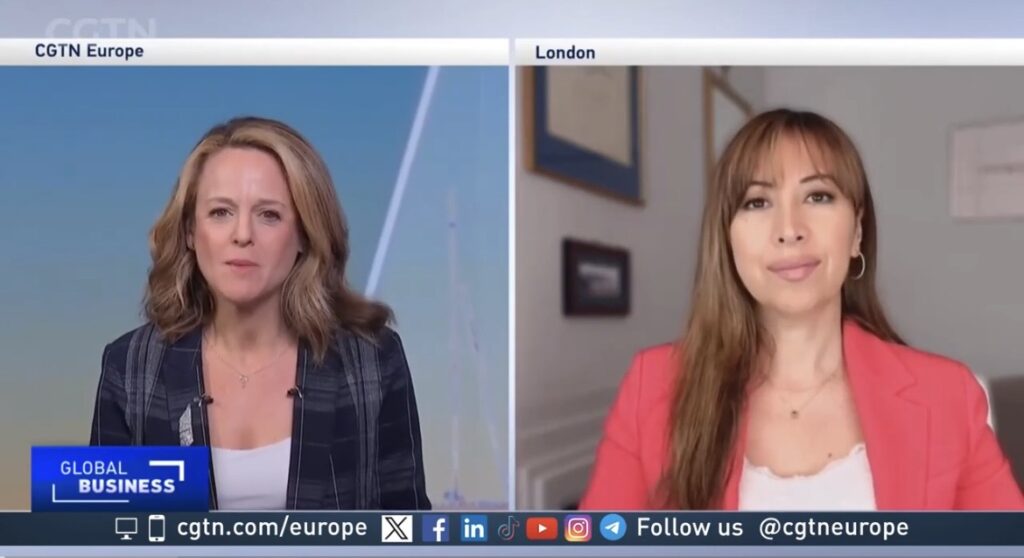

Dr. Carole Nakhle, CEO of Crystol Energy, spoke to CGTN Europe about the recent movement in oil prices, the role of geopolitical risk and what markets are watching as tensions around the Strait of Hormuz show signs of easing.
Key takeaways:
Oil prices are being driven primarily by geopolitics, as the recent price movement is too sharp to be explained by a sudden change in supply fundamentals.
The geopolitical risk premium has eased, but it has not been eliminated because the conflict has paused rather than ended.
Improved market sentiment does not mean that normal oil flows will resume immediately, as confidence in the regional security situation still needs to recover.
The main disruption has been logistical rather than physical, with the Strait of Hormuz blockage limiting trade flows rather than destroying major oil and gas infrastructure.
A visible increase in tanker traffic through the Strait of Hormuz will be the key indicator markets watch in the coming days.
If tanker movements increase and tensions continue to ease, oil prices could face further downward pressure.
Without the geopolitical risk premium, current market fundamentals do not fully justify the elevated price levels seen during the period of heightened tensions.
Related Analysis
“Crisis without collapse: The Middle East oil shock“, Dr Carole Nakhle, Apr 2026
Related Comments
“What measures could EU countries consider to reduce fuel demand?“, Christof Rühl, Apr 2026
“War puts key Iranian oil terminals at risk“, Dr Carole Nakhle, Mar 2026