




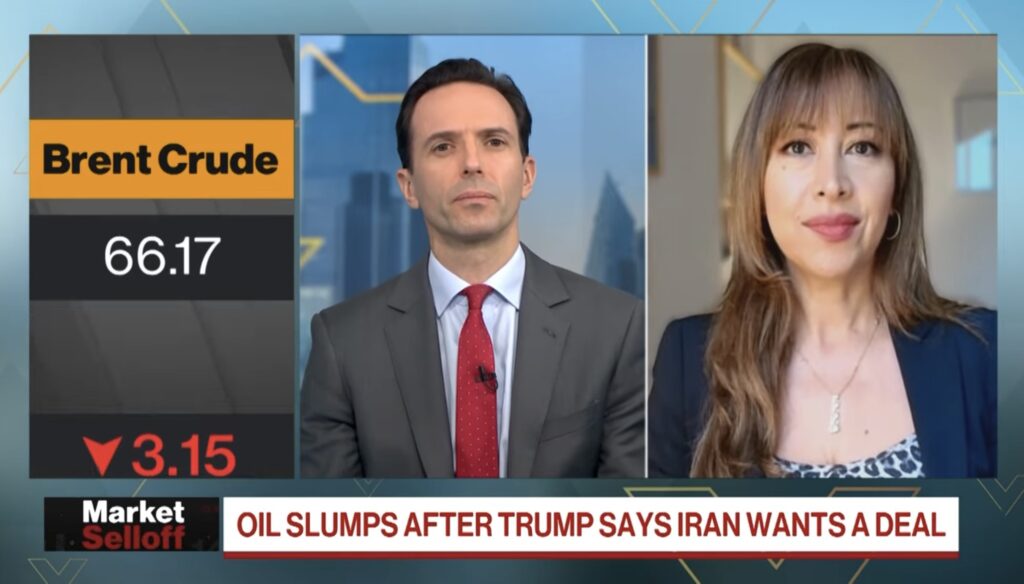
In this Bloomberg interview with Tom Mackenzie, Dr. Carole Nakhle, CEO of Crystol Energy, explains why oil prices are reacting more to geopolitical headlines than to shifts in supply and demand. The conversation covers Iran risk, US gasoline politics ahead of the midterms, and why today’s oil market tends to absorb shocks faster than it did in past decades.
Key takeaways:
Recent price moves have been driven mainly by Iran related headlines, with prices rising on escalatory rhetoric and easing when the tone turned diplomatic, while a residual risk premium stayed in place.
The risk premium persists because markets still expect surprise shifts and rapid messaging changes, especially after the past year or two of policy uncertainty around Iran.
Beyond geopolitics, fundamentals have only shifted at the margin, with US weather tightening supply temporarily and with Black Sea and Caspian disruptions gradually being restored.
A US attack on Iran could lift prices, but the outcome depends on scale and fallout, since a broader regional war could keep prices high while a short targeted strike would likely fade as the market re balances.
A prolonged surge looks less likely because demand is not booming, surpluses are still expected, spare capacity remains available, and even Hormuz disruption would trigger adjustment over time.
US politics supports range bound prices, with 60 to 70 broadly acceptable for consumers and still workable for shale, while extra barrels including those linked to Venezuela easing could help calm the market if tensions rise elsewhere.
Related Analysis
“Global oil market dynamics after U.S. intervention in Venezuela“, Dr Carole Nakhle, Jan 2026
Related Comments
“Venezuela, geopolitics, and what moves oil prices in 2026“, Dr Carole Nakhle, Jan 2026
“Can Trump really get Venezuela’s oil flowing again?“, Dr Carole Nakhle, Jan 2026