




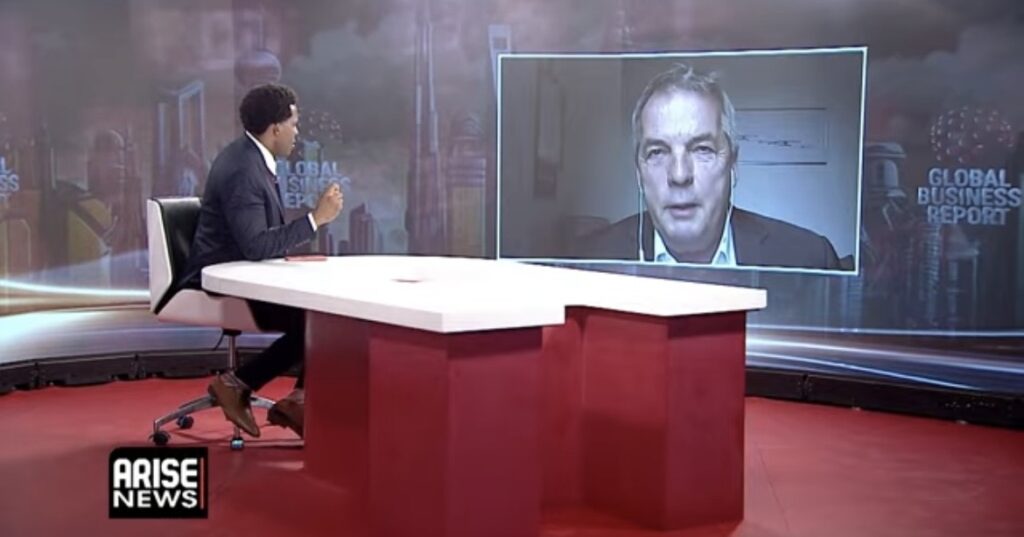
Christof Rühl, Global Adviser at Crystol Energy and Senior Research Scholar at Columbia University’s Center on Global Energy Policy, joined Rotus Oddiri on ARISE News to unpack rising Iran related tensions, what they mean for oil markets, and why prices are swinging between fear and fundamentals.
Key takeaways:
The standoff is driven by a stark red line from Washington on enrichment and an equally firm refusal from Tehran to give enrichment up entirely, leaving politics as the main source of uncertainty.
A face saving compromise remains possible if limited, civilian use enrichment is separated from any pathway to weapons grade material, but domestic and regional constraints make that outcome hard to land.
From the US perspective, walking away without action is politically difficult, so a limited strike is discussed as a signalling move, even though it increases escalation risk.
The reaction inside Iran is highly uncertain, since public unrest could grow but security forces have shown they can respond with force, making outcomes unpredictable.
Oil prices reflect this hot and cold diplomacy, yet the underlying market remains oversupplied, which helps keep prices relatively moderate despite elevated geopolitical risk.
Volatility is amplified by three structural factors, sanctions driven flows into China, oil stored on the water via shadow shipping, and a shrinking spare capacity buffer that can make markets more fragile later in the year.
Related Analysis
“Global oil market dynamics after U.S. intervention in Venezuela“, Dr Carole Nakhle, Jan 2026
Related Comments
“Venezuela, geopolitics, and what moves oil prices in 2026“, Dr Carole Nakhle, Jan 2026
“Can Trump really get Venezuela’s oil flowing again?“, Dr Carole Nakhle, Jan 2026