

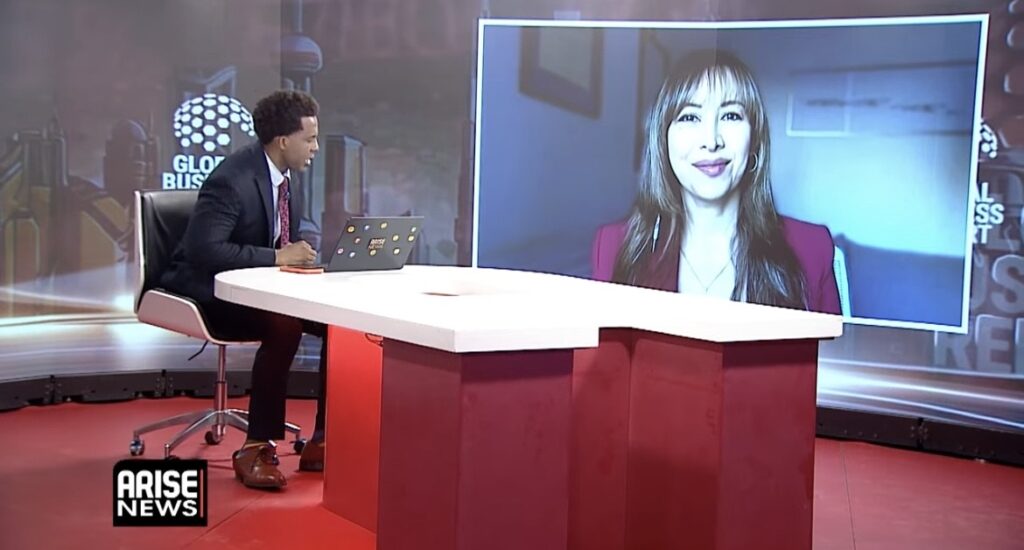
In this interview given to Rotus Oddiri from Arise News, Dr. Carole Nakhle, CEO of Crystol Energy, explains why oil prices are under upward pressure as geopolitics returns to the forefront. The discussion covered the US approach to sanctioned Venezuelan oil, the realism needed around reform timelines, and why Iran remains the bigger risk for global oil trade and regional stability. The interview also touched on winter storms in the United States and how weather can temporarily affect production and inventories.
Key takeaways:
Allowing some Venezuelan barrels to move can raise revenues, but weak governance means there is no guarantee the money will translate into public benefit.
Oversight mechanisms can improve transparency at the margin, yet they cannot substitute for strong institutions and rule of law.
Venezuela’s oil and gas reforms may attract interest, but implementation will take years because laws, policies, skills, and administrative capacity must be rebuilt.
Iran poses a larger oil market risk than Venezuela because of its scale, continued exports, and potential to disrupt exports from a critical chokepoint.
Winter storms in the US can temporarily constrain shale output and accelerate inventory drawdowns, but the effect is seasonal rather than structural.
The recent lift in prices is mainly a geopolitical risk premium, and it could fade if tensions de escalate without a major shift in fundamentals.
Related Analysis
“Global oil market dynamics after U.S. intervention in Venezuela“, Dr Carole Nakhle, Jan 2026
Related Comments
“Venezuela, geopolitics, and what moves oil prices in 2026“, Dr Carole Nakhle, Jan 2026
“Can Trump really get Venezuela’s oil flowing again?“, Dr Carole Nakhle, Jan 2026