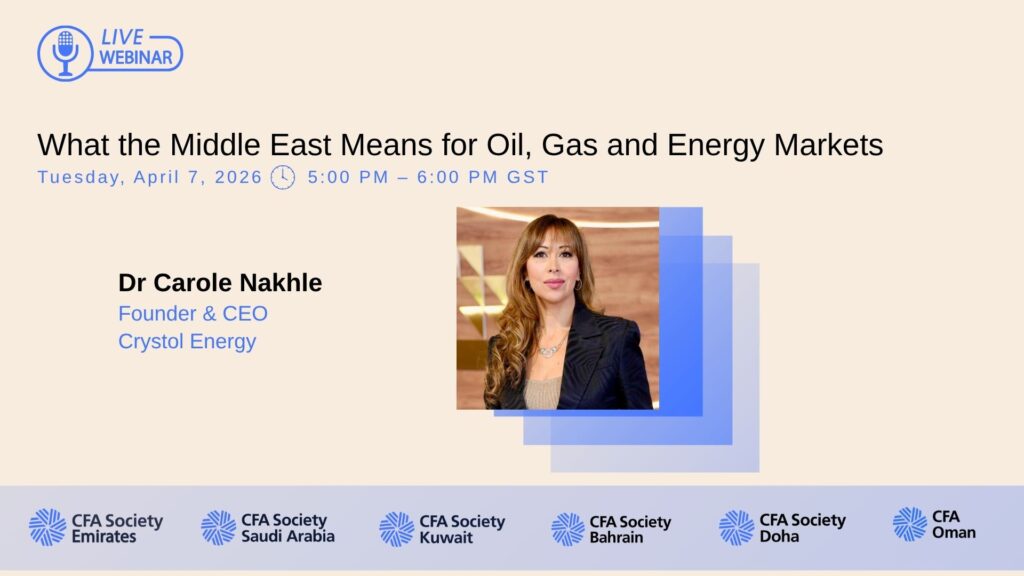





In a BBC article by Rachel Clun, Dr Carole Nakhle, CEO of Crystol Energy, shared her perspective on the current energy shock triggered by the disruption of flows through the Strait of Hormuz. The article examines whether the world could be heading toward a crisis even more severe than the oil shocks of the 1970s, and sets out the different views shaping that debate.
Dr Nakhle explained that the 1970s oil crisis was fundamentally different from today’s situation. In her view, that earlier shock was driven by a deliberate political decision by Arab producers to impose an oil embargo and cut production, which caused prices to surge sharply within a short period. She noted that the consequences were severe, with fuel rationing, major economic disruption, and lasting financial damage across leading economies.
Oil production, share of world
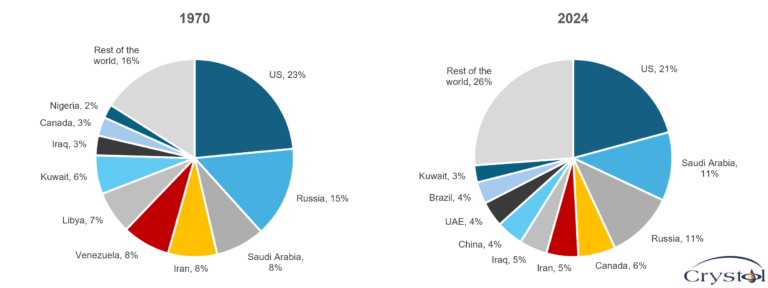
Against this historical backdrop, Dr Nakhle argued that while the current disruption is serious and among the largest seen in recent history, the global oil market is now far more resilient than it was five decades ago. She pointed out that the market is more diversified, less dependent on oil relative to the size of the global economy, and better supported by buffers and emergency response mechanisms.
Her comments suggest that although the present crisis is putting real pressure on energy markets, it should not be viewed as a repeat of the 1970s. The scale of disruption is significant, but the structure of today’s market gives consumers and policymakers more tools to manage the shock. In that sense, the risk is real, but the system is better equipped to absorb it.
Related Comments
“The Saudi oil pipeline the world didn’t know it needed“, Dr Carole Nakhle, Mar 2026
“US eases sanctions on Russian oil amid energy crisis sparked by Iran conflict“, Christof Rühl, Mar 2026
“War puts key Iranian oil terminals at risk“, Dr Carole Nakhle, Mar 2026