


An Opinion Piece by Peter van Leeuwen
This note is adapted from remarks delivered by Peter van Leeuwen at Crystol Energy’s Advisory Board Roundtable Discussion, held in London on 9 June 2026.
The Iran war Is not the crisis. It Is the Accelerator of a New Middle East
History often disguises structural transformations behind military events.
The war involving Iran is widely presented as a regional security crisis, a confrontation over nuclear ambitions, missiles, or the balance of power in the Gulf. Yet these explanations only capture the surface of what is happening.
The real significance of the conflict lies elsewhere.
The Iran war is accelerating a geopolitical reordering that was already underway: the fragmentation of globalization, the militarization of trade routes, the return of great-power competition, and the growing difficulty for Arab states to remain strategically autonomous.
The question is no longer whether Iran wins or loses.
The question is what kind of Middle East emerges after the war.
1. The End of the Globalized Middle East
For nearly three decades, much of the Arab world benefitted from a relatively stable international environment.
The Gulf exported energy to Asia and Europe.
Egypt monetized geography through the Suez Canal.
Morocco positioned itself as a bridge between Europe, Africa, and the Atlantic.
The United Arab Emirates became a global logistics hub.
Saudi Arabia launched ambitious diversification programs designed for a world of uninterrupted trade and investment.
All of these models depended on one assumption: that global commerce would remain largely open and predictable.
That assumption is now breaking down.
The conflict around Iran has exposed the vulnerability of the world’s most important maritime corridors, from the Strait of Hormuz to Bab el-Mandeb and the Red Sea. Shipping routes that once seemed permanent are becoming contested, shaped by military power, insurance costs, and geopolitical alignments. Major carriers are rerouting vessels around Africa, extending transit times and increasing costs throughout global supply chains.
The Middle East is no longer simply a supplier of energy to globalization.
It is becoming one of the principal battlegrounds over who controls globalization itself.

2.Egypt: The First Casualty of Maritime Fragmentation
No country illustrates this transformation more clearly than Egypt.
For generations, the Suez Canal represented one of the world’s most valuable geopolitical assets. It transformed geography into revenue and influence.
But the war has revealed a fundamental vulnerability: Egypt does not control the strategic environment around the Canal.
Instability in the Red Sea, attacks on commercial shipping, and the broader confrontation linked to Iran have sharply reduced maritime traffic and generated massive revenue losses for Cairo. Egyptian authorities have publicly acknowledged losses approaching $10 billion in canal revenues as shipping companies diverted vessels away from the Red Sea corridor.
This is not simply an Egyptian problem.
It signals a larger shift.
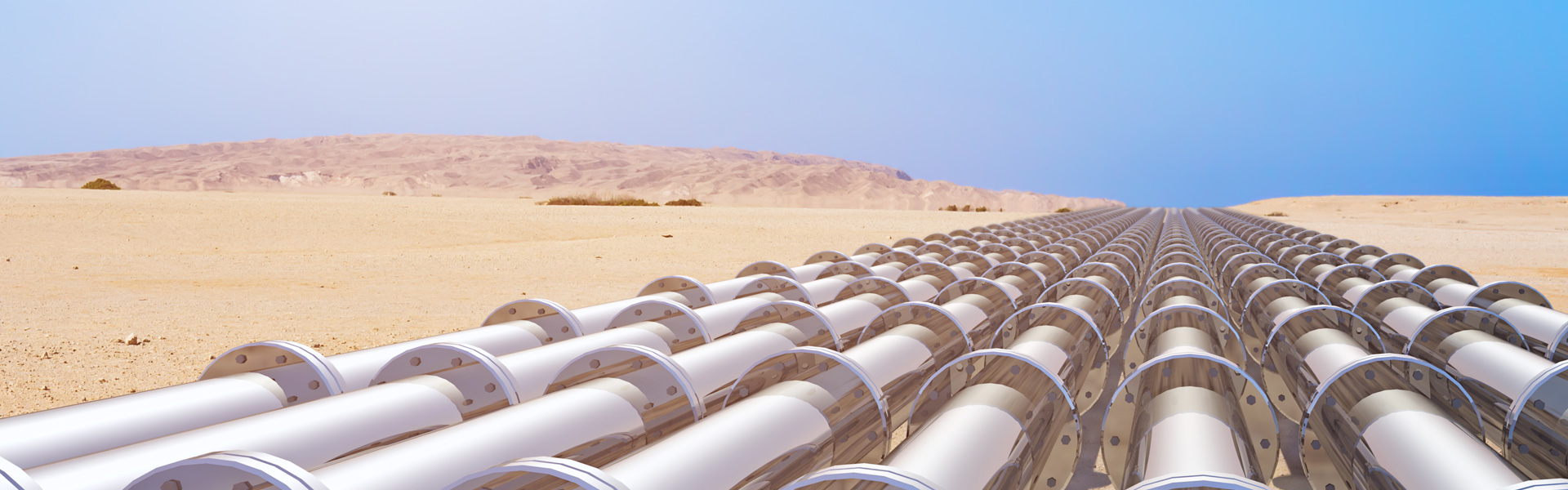
For the first time in generations, alternative routes, alternative pipelines, and alternative trade corridors are being actively developed to bypass traditional chokepoints. What was once an irreplaceable advantage is becoming a contested one.
The strategic question facing Egypt is therefore existential: can it remain the indispensable bridge between Europe and Asia, or is it entering an era where geography alone is no longer enough?
3.The Gulf's Paradox
At first glance, Gulf states appear positioned to benefit from the crisis.
Higher energy prices increase revenues. Energy security concerns enhance the strategic importance of Gulf producers.
Yet beneath these short-term gains lies a deeper challenge.
The economic visions of Saudi Arabia, the UAE, Qatar, Bahrain, Kuwait, and Oman were designed for a world characterized by stability, investment flows, tourism growth, and logistical integration.
War threatens all four.
The IMF has already warned that the conflict is affecting business confidence and slowing economic activity even in the region’s strongest economies.
The paradox is striking.
The Gulf may earn more from oil while simultaneously becoming less attractive as a destination for global capital.
The same instability that raises prices also raises risk.
4.Oman and the Crisis of Neutrality
Among Gulf states, Oman occupies a unique position.
For decades, Muscat built influence not through military power but through diplomatic utility. It maintained dialogue with actors who refused to speak directly to one another and often served as a discreet channel between adversaries.
This strategy reflected geography and necessity.
Situated near Hormuz, Oman understood that survival required communication with all sides.
Today, that model is under strain.
As confrontation intensifies, great powers increasingly demand alignment rather than mediation. The space available for neutrality shrinks.
The danger is not merely for Oman.
If states capable of speaking to all sides disappear, the region loses its remaining diplomatic shock absorbers. The result may be stronger alliances, but weaker crisis management.
The Middle East has many armies.
It has far fewer mediators.
5. Morocco and the New Non-Aligned Challenge
The same logic increasingly affects Morocco.
Although geographically removed from the Gulf, Morocco occupies a strategic intersection between Europe, Africa, the Atlantic, and the Arab world.
Its success has rested on diversification: maintaining strong ties with Western partners while expanding economic relationships across Africa, China, and emerging markets.
As economic, technological, and security competition intensifies, countries are increasingly expected to choose sides.
For Morocco, as for Oman, the challenge is not military.
It is preserving strategic room for maneuver in a world that increasingly interprets neutrality as ambiguity.
6. Europe's Self-Inflicted Marginalisation
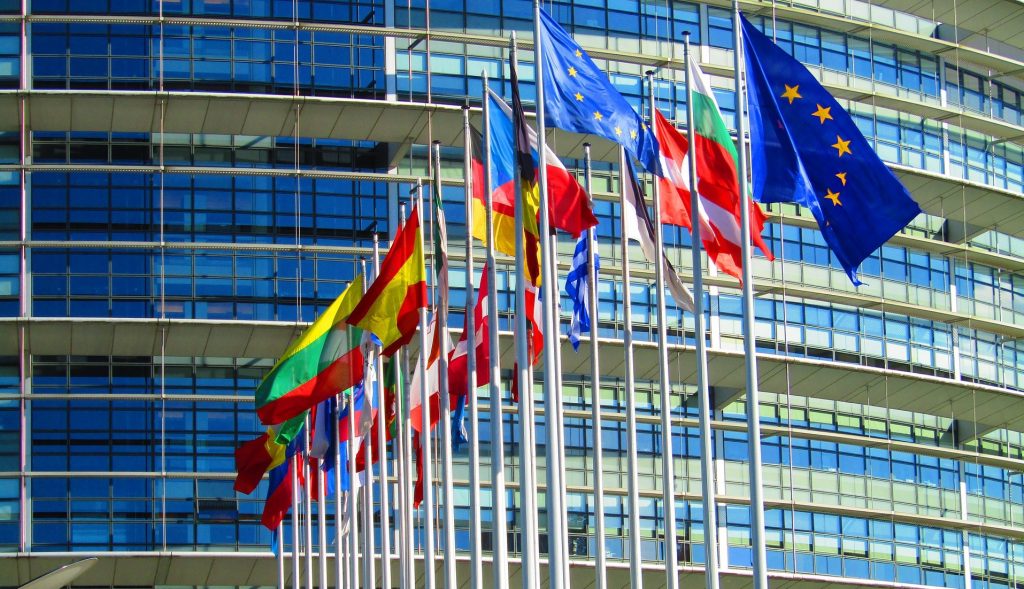
The war also reveals a difficult reality for Europe.
The European Union remains heavily dependent on secure maritime trade routes and imported energy.
Yet it exercises limited influence over the forces disrupting them.
Energy costs rise.
Shipping costs increase.
Insurance premiums surge.
Industrial competitiveness weakens.
Meanwhile, decisions shaping these outcomes are increasingly made elsewhere: in Washington, Beijing, Tehran, Riyadh. Maritime insurers have sharply increased risk assessments across the region, contributing to higher transportation costs and supply-chain disruptions.
Europe bears substantial economic costs while possessing diminishing strategic leverage.
Its challenge is no longer merely economic.
It is geopolitical relevance. From player, it has become onlooker.
7.The Return of Empire Through Trade
Perhaps the most overlooked consequence of the conflict concerns maritime governance.
For centuries, global shipping operated under relatively unified commercial and insurance frameworks centered largely around London.
That system is beginning to fracture.
As private insurers struggle to absorb wartime risks, states increasingly intervene directly through naval protection, sovereign guarantees, and strategic escorts.
Trade routes are becoming security corridors.
Commercial globalization is becoming geopolitical globalization.
The implication is profound.
In the emerging system, access to markets may depend not only on commercial competitiveness but also on which security architecture protects a vessel.
The world is moving from a universal trading order toward competing spheres of protection.
8. China, US, and the Arab World
This transformation also explains why every major discussion between Washington and Beijing increasingly leads back to the Middle East.
China depends heavily on energy imports crossing Hormuz and the Indian Ocean.
The United States remains the dominant military power capable of influencing those routes.
Both powers compete intensely.
Yet both remain dependent on the stability of the same maritime system.
The Middle East is no longer merely a regional theater.
It is becoming one of the central arenas where the future balance between American and Chinese power will be tested.
9. The Arab World's Strategic Crossroads
The greatest shift triggered by the Iran war may ultimately be political rather than military.
For decades, Arab states sought prosperity through connectivity.
Connectivity to global trade.
Connectivity to international finance.
Connectivity to multiple partners.
Today, they face a world moving toward fragmentation.
The strategic dilemma confronting Egypt, Oman, Morocco, and even the Gulf monarchies is therefore the same:
How do you preserve autonomy when great powers demand alignment?
How do you keep trade routes open when they are becoming militarized?
How do you remain neutral when neutrality itself becomes suspect?
These questions will outlast the war.
Because the Iran conflict is not creating a new Middle East.
It is accelerating one that was already emerging.
The future of the Arab world will depend less on who wins the war than on which states successfully adapt to the world that follows it.
Related Events
“Ideas, Friendship and Insight: Crystol Energy’s Annual Advisory Board Roundtable“, Jun 2026
Related Analysis
“Crisis without collapse: The Middle East oil shock“, Dr Carole Nakhle, Apr 2026