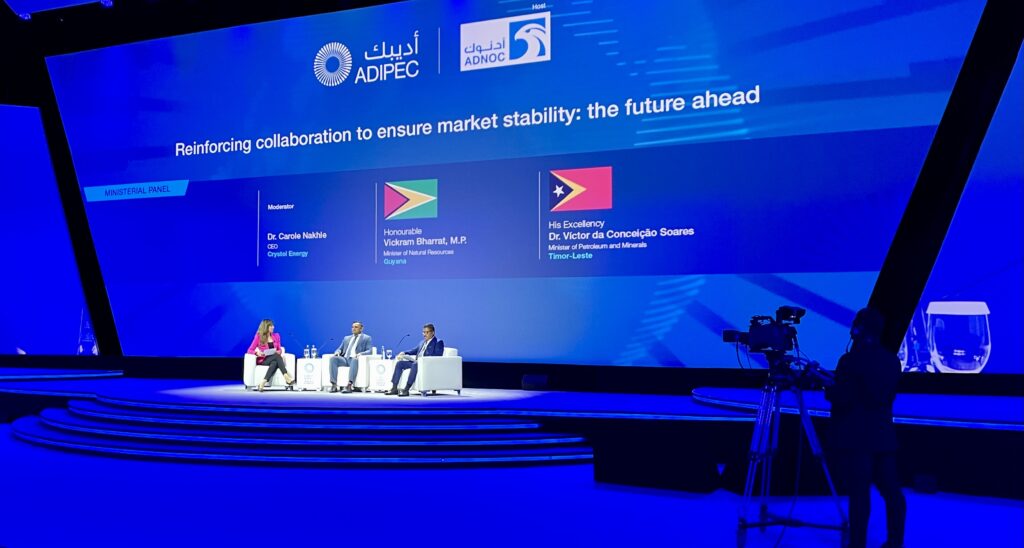





Dr. Carole Nakhle, CEO of Crystol Energy, was featured in was featured by ADIPEC to discuss how the strikes involving Iran are affecting global energy flows, oil and gas markets, and wider economic sentiment. Her analysis highlights that while the conflict has pushed prices higher and heightened fears across energy markets, the response has so far stopped short of a full blown crisis. That relative restraint reflects the fact that markets had entered the year expecting a supply surplus, which helped cushion the initial shock even as tensions escalated sharply.
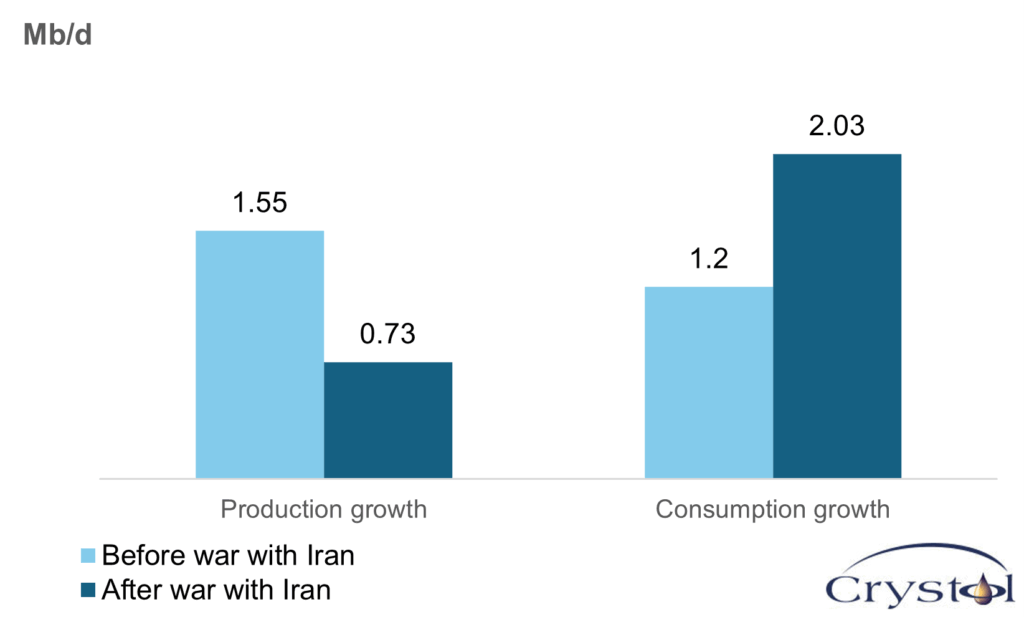
Oil supply and demand growth, 2025-26
The article also explains why market resilience should not be mistaken for complacency. Stronger supply fundamentals, spare production capacity, and the availability of strategic petroleum reserves have all helped contain panic and prevent a more severe disruption. At the same time, the risk remains highly sensitive to events on the ground. The targeting of energy infrastructure in the region raises the stakes significantly, especially if such incidents become more frequent or begin to affect facilities that are harder to restore quickly.
Beyond the immediate market reaction, the article points to the broader consequences of a prolonged conflict. The longer instability persists, the greater the pressure on global growth, trade, investment sentiment, and regional confidence. The analysis makes clear that this is not only a story about oil barrels and price movements, but about a wider geopolitical crisis with the potential to reshape the Middle East and carry lasting consequences for the global economy.
Related Analysis
“Shadow fleet keeps Russia’s oil exports beyond Western reach“, Dr Carole Nakhle, Mar 2026
Related Comments
“Middle East crisis raises energy risks but worst case is not here yet“, Dr Carole Nakhle, Mar 2026
“Where are crude prices headed?” Christof Rühl, Mar 2026