



In the Gulf Intelligence Daily Energy Markets Podcast, Dr. Carole Nakhle, CEO of Crystol Energy, discussed how the prolonged regional conflict is reshaping oil markets, trade routes and investment decisions, while highlighting why a return to business as usual remains unlikely even as Middle Eastern oil export volumes recover.
Key takeaways:
Oil markets continue to react strongly to the psychological threshold of $100 per barrel, although December contracts remain below three digit territory, suggesting markets are not pricing current conditions as permanent.
Middle Eastern oil export volumes are approaching levels seen before the war, but the comparison masks substantially higher costs associated with ship to ship transfers, insurance, intelligence and other measures needed to keep barrels moving.
Uncertainty remains the defining feature of the market, with no clear end to the conflict in sight, making it unwise to assume that the US midterm elections will become a turning point.
Countries with strategic locations that can offer alternatives to the Strait of Hormuz now have an opportunity to strengthen their role in regional energy trade, including Oman through expanded oil storage and Syria through efforts to revive oil transit from Iraq towards European markets.
A simple return to previous trading patterns is unlikely because the underlying security risk remains while both Iran and the United States continue to play major roles in the region.
Governments across the region are responding to higher perceptions of investment risk by revisiting their economic models, strengthening the investment environment and reducing dependence on unsustainable sources of revenue.
The crisis was driven largely by actors outside the region, which could encourage greater cooperation among Middle Eastern countries and stronger regional interconnectivity as governments recognise their shared exposure to the same risks.
OPEC continues to matter because much of the world’s spare production capacity remains concentrated in the region, even if physical constraints currently make that capacity harder to bring to global markets.
OPEC also faces important questions over how Iraq’s role within the group may evolve, and how a potentially expanding Venezuelan oil sector and its changing relationship with the United States could reshape oil supply dynamics.
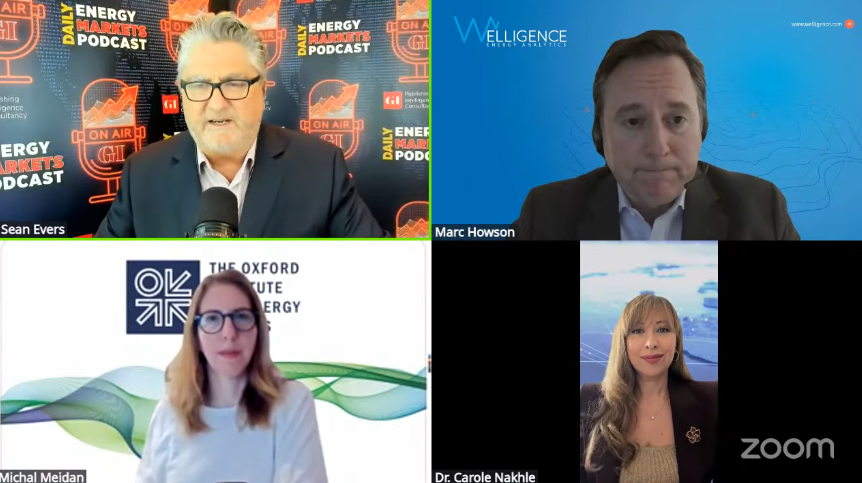
The discussion also featured Marc Howson, Head of APAC and Global LNG at Welligence Analytics, and Michal Meidan, Head of the China Research Programme at the Oxford Institute for Energy Studies, and was moderated by Sean Killian Evers of Gulf Intelligence.
Related Comments
“Iran War: Asia most at risk in an LNG shortage“, Christof Rühl, Mar 2026
“US and Israel launch major military strikes on oil-rich Iran“, Dr Carole Nakhle, Feb 2026