


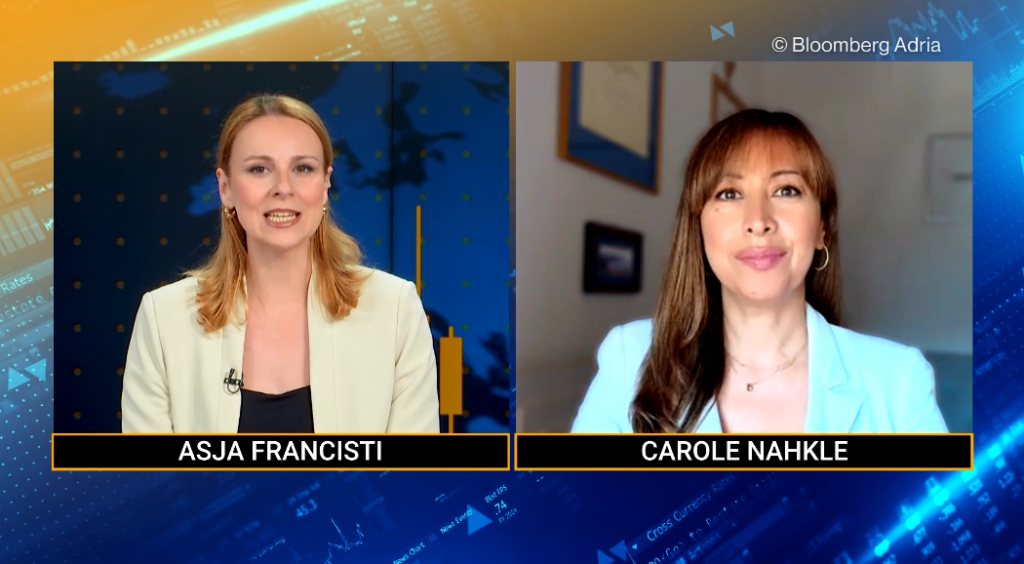

In an interview with Asja Francisti from Bloomberg Adria, Dr. Carole Nakhle, CEO of Crystol Energy, discussed the outlook for oil and gas markets following the easing of military tensions between the United States and Iran, the reopening of the Strait of Hormuz and the start of a difficult negotiation process.
Key takeaways:
Oil prices have remained relatively contained because the market is well supplied and part of the geopolitical risk premium has eased.
The geopolitical risk premium has not disappeared, as a final agreement is still needed to provide lasting confidence to markets.
Traffic through the Strait of Hormuz is expected to normalize gradually, as logistical bottlenecks, insurance risks, mine clearance concerns and infrastructure issues take time to resolve.
Middle East supply recovery is more likely to be constrained by logistics and transit issues than by lasting damage to production capacity.
Middle Eastern producers are likely to restore production faster than many expect, supported by technical expertise, economic incentives and the need to reaffirm their reliability.
Gas prices may remain under pressure during the storage refill season, but Europe is in a stronger position than it was during the 2022 energy crisis.
Gas markets remain sensitive to supply disruptions, but the availability of alternative sources and fuel substitution limits the risk of a 2022-style price shock.
Related Analysis
“Crisis without collapse: The Middle East oil shock“, Dr Carole Nakhle, Apr 2026
Related Comments
“Pace of oil supply recovery in focus amid US-Iran deal“, Dr Carole Nakhle, Jun 2026
“What is driving oil price volatility?“, Dr Carole Nakhle, Jun 2026