


The latest conflict in the Middle East has once again brought energy security to the forefront of policy discussions. Beyond its impact on oil and gas supplies, international shipping and energy prices, the crisis has raised important questions about the resilience of the region’s power sector and its ability to withstand future disruptions.
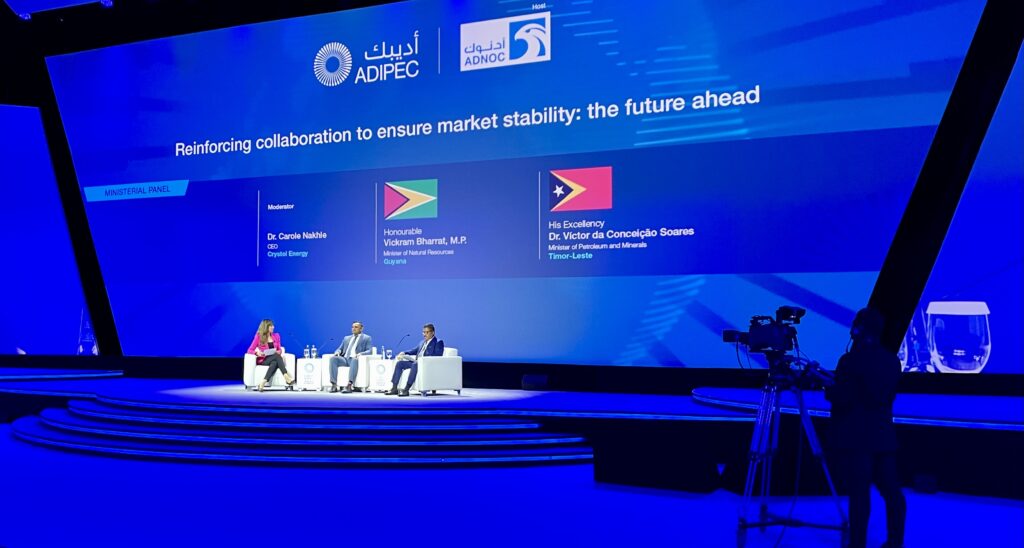
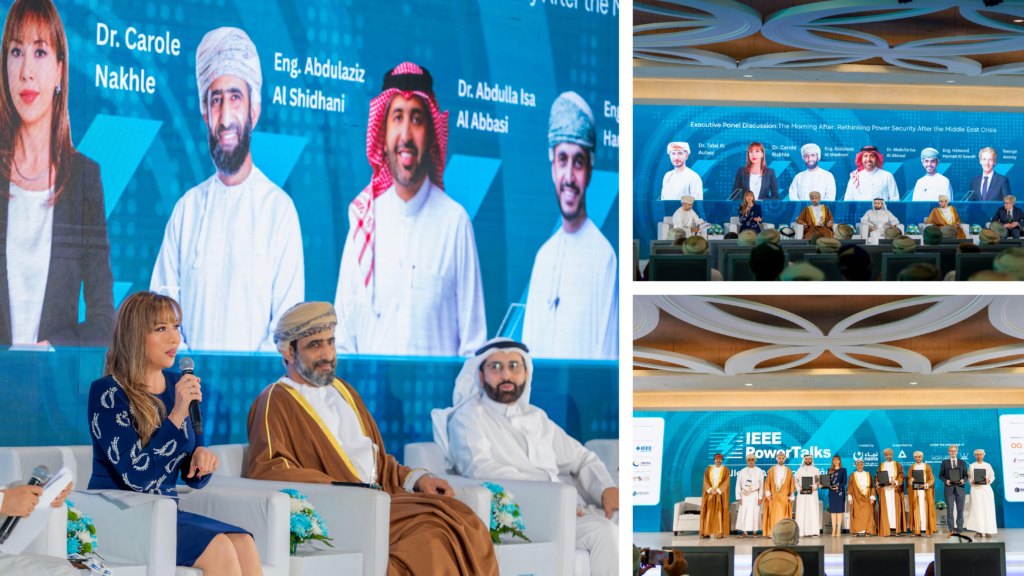
These issues were discussed at the opening Executive Panel of IEEE PowerTalks 2026, held in Muscat, Oman, on 12 October. Under the theme “The Morning After: Rethinking Power Security After the Middle East Crisis,” Dr Carole Nakhle, CEO of Crystol Energy, joined industry leaders and energy experts to examine the lessons of the crisis and their implications for energy policy and investment.
Energy Security in an Evolving Risk Landscape
Every energy crisis provides lessons that help countries become better prepared for similar disruptions. However, technology, markets and geopolitics continue to evolve, introducing new risks and exposing previously unforeseen vulnerabilities.
The fundamentals of energy security remain unchanged: availability, reliability and affordability. What evolves is the nature of the threats and the means of addressing them.
Technology illustrates this duality. Drones can improve the monitoring and inspection of critical energy infrastructure, but they can also be used to attack those same facilities at relatively low cost. Similarly, digitalisation can improve electricity system efficiency and reliability while increasing exposure to cyber threats.
As Dr Nakhle observed during the discussion:
“Abundant energy resources do not necessarily guarantee energy security. Even major producers can face disruptions when critical infrastructure or transport routes are compromised.”
Diversification and the Cost of Dependence
One of the clearest lessons concerns the risks of excessive dependence on a single fuel, supply route or market.
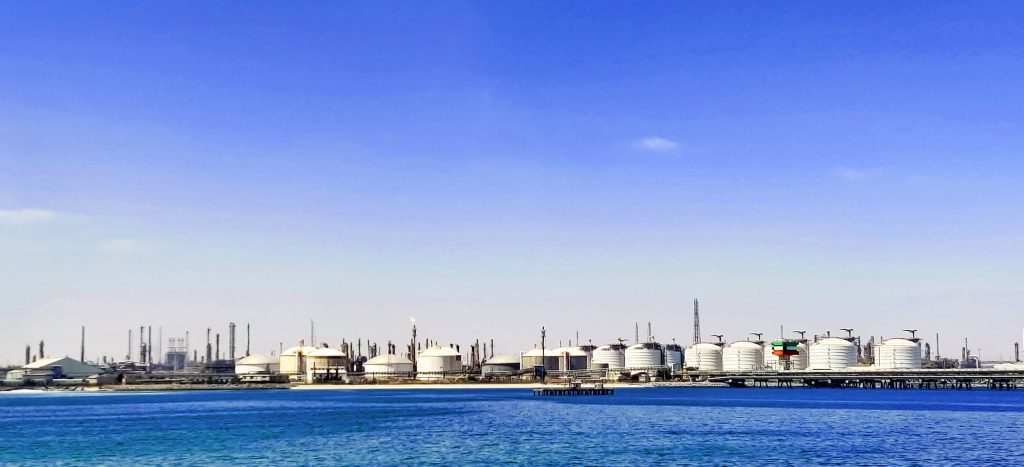
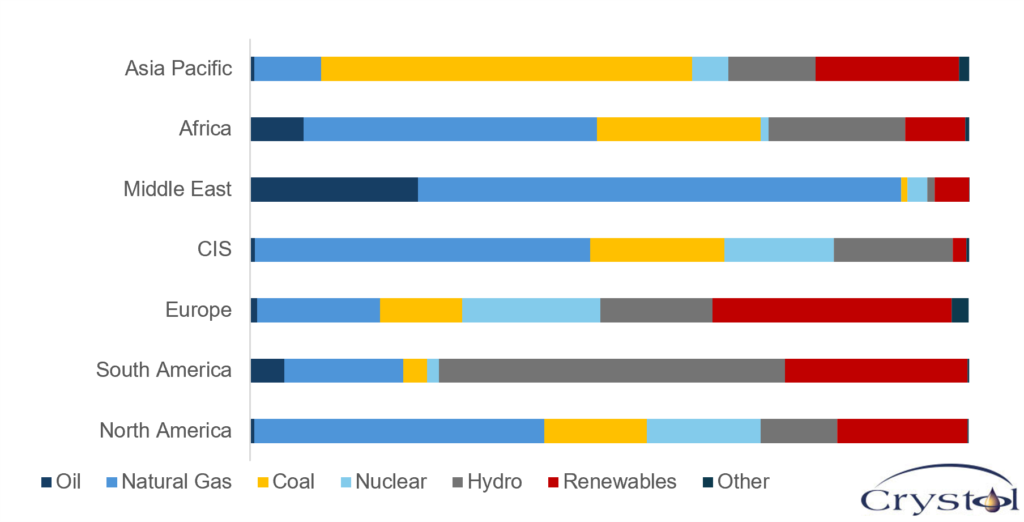
Despite ambitious transition targets, electricity generation across much of the Middle East remains heavily dependent on oil and natural gas. Progress in diversifying the power mix has been uneven, leaving many countries exposed to fuel supply disruptions and price volatility.
The region has demonstrated remarkable adaptability in managing the crisis, but at a considerable economic cost. Beyond the immediate disruption to energy exports and shipping, the conflict has raised questions about geopolitical risk and the region’s attractiveness as an investment destination.
This is particularly relevant to the power sector, where projects require substantial capital and long-term commitments. Infrastructure resilience and political risk will remain important considerations for investors.
Electricity mix by region
Regional Cooperation and Infrastructure Protection
Regional electricity interconnections can strengthen energy security by allowing countries to share available capacity and support one another during emergencies.
The GCC electricity interconnection provides an important foundation, but there is scope to strengthen cooperation and extend connections beyond the GCC.
The changing nature of threats also calls for greater preparedness and coordination. Joint contingency planning, information sharing and emergency exercises can help countries respond to complex disruptions, including simultaneous attacks on multiple facilities and cyber incidents.
Protecting existing infrastructure is as important as building new capacity.
AI, Electricity Demand and Economic Competitiveness
Artificial intelligence presents both opportunities and challenges for the region’s power sector.
The expansion of data centres is creating additional demand for reliable electricity, placing pressure on generation and transmission infrastructure. At the same time, AI can improve demand forecasting, predictive maintenance, system management and operational efficiency.
For Middle Eastern countries seeking to attract investment in AI and digital infrastructure, reliable and competitively priced electricity will be increasingly important.
Energy security is therefore closely linked to the region’s broader economic diversification and competitiveness.
From Crisis Response to Long-Term Resilience
The aftermath of the Hormuz crisis provides an opportunity to reassess the region’s energy priorities.
Accelerating diversification, protecting critical infrastructure, strengthening regional interconnections and improving emergency preparedness will require sustained investment and effective coordination.
These priorities must also be considered within their economic context. Governments need to balance security of supply with affordability, competitiveness and decarbonisation, recognising that the appropriate energy mix and policy choices will differ across countries.
The challenge is to translate the lessons of the crisis into lasting improvements rather than temporary responses to immediate pressures.
Building more diversified, interconnected and resilient energy systems will be essential both to managing future geopolitical shocks and to supporting the Middle East’s long-term economic development.
Related Events
“Crystol Energy Delivers Keynote at IPIECA Week in London“, Apr 2026
“Carole Nakhle on Energy, Geopolitics, and Talent at Arab Women Business Forum, London“, Apr 2026
“Dr Carole Nakhle joins Energy Connects Global Advisory Board“, Jan 2026
“Crystol Energy leads strategic LNG discussions at the World LNG Summit in Istanbul“, Dec 2025