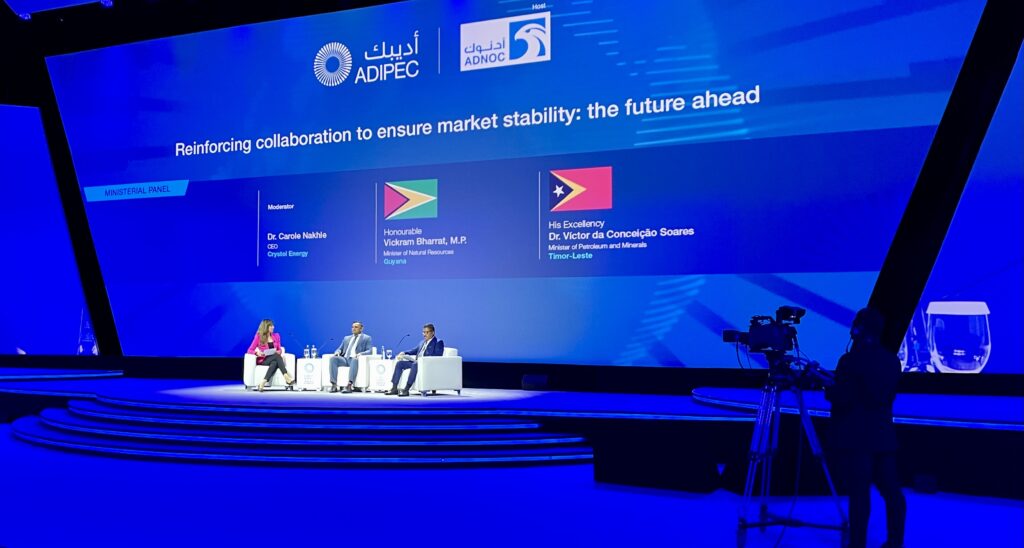





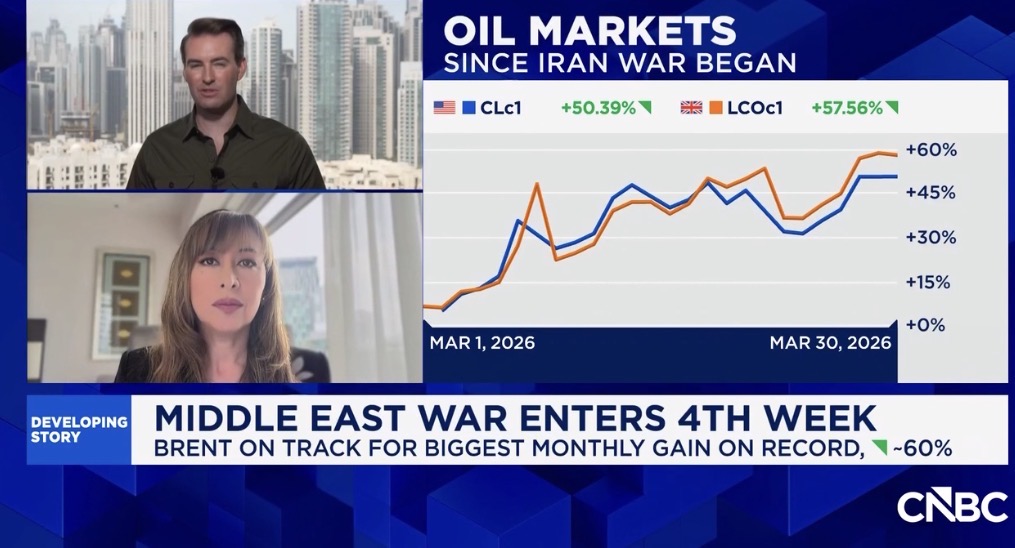
Dr. Carole Nakhle, CEO of Crystol Energy, joined Dan Murphy on CNBC to discuss how ongoing Middle East tensions are influencing oil and gas markets, and whether current pricing reflects fundamentals or geopolitical risk. The discussion also touched on how uncertainty around key supply routes and infrastructure continues to shape market sentiment.
Key takeaways:
- Oil prices remain supported by a strong geopolitical risk premium, as markets react to uncertainty rather than a breakdown in fundamentals.
- Current disruptions are large in absolute volumes, but remain moderate when viewed as a percentage of global supply.
- Prices are holding steady, indicating market resilience rather than a collapse driven by supply shocks.
- If a deal is reached, oil prices are expected to normalize, as disruptions are largely logistical and have not significantly impacted production capacity.
- LNG markets face greater vulnerability due to concentrated supply, with the United States, Australia, and Qatar accounting for a large share of global exports.
- Potential disruptions to key infrastructure such as Ras Laffan could have a stronger impact on LNG prices than on oil.
- Alternatives to gas, such as coal, can help offset supply shortages but come with higher environmental costs.
- Lower income Asian economies are introducing measures to manage demand in response to rising energy prices.
- The key uncertainty remains the future control and security of the Strait of Hormuz, a critical route for global energy flows.
Related Analysis
“Crisis without collapse: The Middle East oil shock“, Dr Carole Nakhle, Apr 2026
Related Comments
“What measures could EU countries consider to reduce fuel demand?“, Christof Rühl, Apr 2026
“War puts key Iranian oil terminals at risk“, Dr Carole Nakhle, Mar 2026