crystol-title-company-overview
crystol-title-tailored-advice
crystol-title-animation2
crystol-title-news-main
crystol-title-tailored-advice2
crystol-title-case-studies-main

War in Iran and its consequences on global energy supply

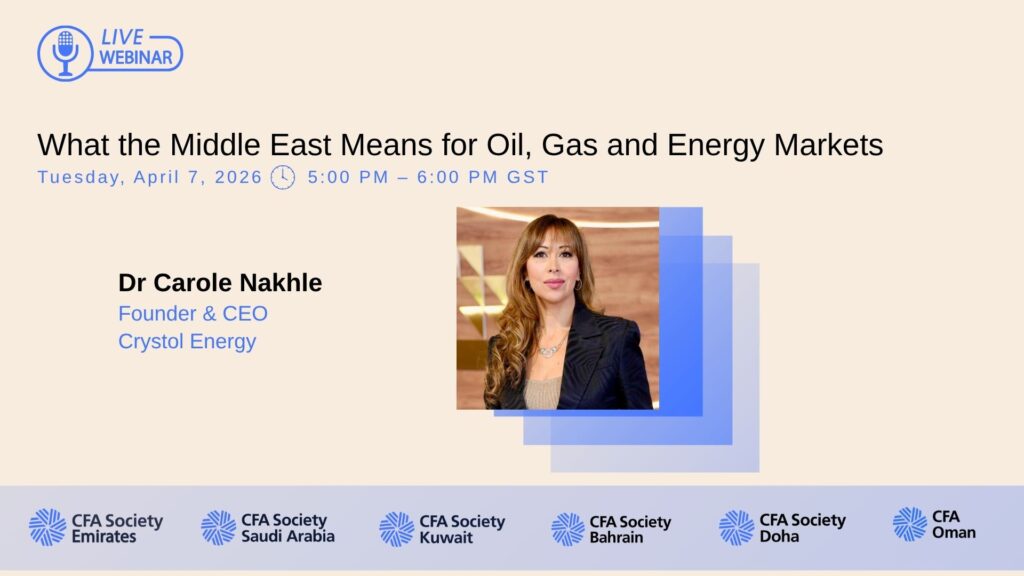
In this webinar with Andrew Kureth, Managing Editor at Geopolitical Intelligence Services, Dr. Carole Nakhle, CEO of Crystol Energy, discussed how the conflict in Iran and the wider Middle East is affecting oil and gas markets. She explained that this is one of the most serious scenarios energy analysts have considered, not only because of the threat to the Strait of Hormuz, but also because attacks have directly affected energy infrastructure across the region. 

On a GIS webinar, Dr. Carole Nakhle explains why Middle East disruption is raising risks for global energy markets

Key takeaways:

  • The conflict in the Middle East has moved beyond a localized shock and is now affecting trade routes, production, and energy infrastructure across one of the world’s most important exporting regions.

  • The Strait of Hormuz remains central to the crisis, with major implications for global oil and LNG flows and with direct effects already filtering through supply chains.

  • The greater danger lies in continued attacks on regional energy infrastructure, which could remove export alternatives and drag Gulf producers more directly into the conflict.

  • Oil and gas markets are reacting differently. Oil feels the shock more broadly, while gas impacts are more uneven, with spot traded LNG seeing the sharpest immediate pressure, especially in Asia and Europe.

Share this:

Recent Posts

SPE Tech Talks

Crystol Energy is proud to announce its collaboration with the Society of Petroleum Engineers (SPE). The energy transition and the transformation of our global and

Read More »

Categories