

As geopolitical tensions reshape global energy markets and the energy transition introduces new dependencies, the meaning of energy security is evolving. The challenge facing governments is how to strengthen security of supply while navigating short-term disruptions and preparing for longer-term structural changes.
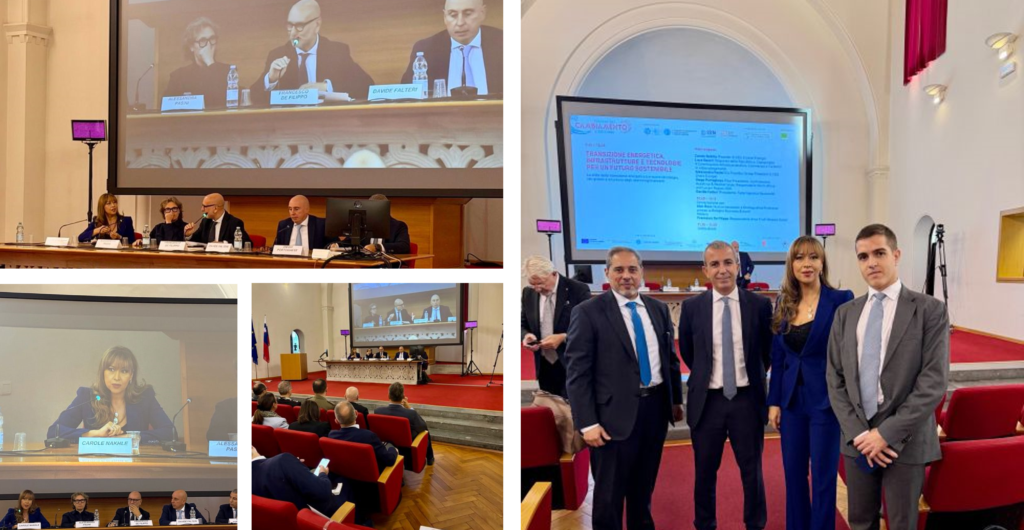
These issues were at the centre of discussions at the fifth edition of the Festival del Cambiamento (Festival of Change), held on 5–6 October 2026 in Trieste and Gorizia, Italy, under the theme “Energy Without Borders”.
The Festival brought together senior policymakers, business leaders and energy experts, including Italy’s Minister of the Environment and Energy Security, Gilberto Pichetto Fratin; President of the Friuli Venezia Giulia Region, Massimiliano Fedriga; and representatives from ENI, ENEL and other leading organisations. Discussions focused on geopolitical risks, security of supply and energy prices, with nuclear energy also featuring prominently.
Speaking on the panel “Energy Transition, Infrastructure and Technologies for a Sustainable Future”, Dr Carole Nakhle, CEO of Crystol Energy, challenged the growing emphasis on energy self-sufficiency as a means of achieving energy security.
While domestic production can reduce exposure to certain external risks, self-sufficiency does not necessarily guarantee security. Japan’s experience following the Fukushima nuclear disaster illustrates this distinction. When domestic nuclear generation was disrupted, access to international LNG markets helped compensate for the loss of electricity supply.
Diversification remains the fundamental principle of energy security, whether in terms of fuels, suppliers, technologies or transport routes. The ability to draw on alternative sources of supply is often more valuable than reliance on domestic production alone.
This principle is becoming increasingly important as the energy transition reshapes global dependencies. While the transition may reduce reliance on some traditional energy sources, it is creating new vulnerabilities through the geographical concentration of critical minerals, their processing and the manufacturing of key energy technologies. In some cases, these supply chains are more concentrated than those associated with conventional oil and gas.
The ongoing conflict in the Middle East has added urgency to discussions about energy security and the resilience of global supply chains. However, Dr Nakhle cautioned against allowing immediate geopolitical shocks to drive drastic long-term policy and investment decisions without considering underlying market trends.
Energy infrastructure requires substantial capital and has a long operational life. Decisions taken in response to today’s disruptions must therefore account for how global supply, demand and trade patterns may evolve well beyond the current crisis.
The Festival was organised by the Med-Or Italian Foundation, in collaboration with the International Strategic Network and the Venezia Giulia Chamber of Commerce, providing a platform for exchanges on the geopolitical, economic and technological forces reshaping the global energy landscape.
Related Events
“Crystol Energy Delivers Keynote at IPIECA Week in London“, Apr 2026
“Carole Nakhle on Energy, Geopolitics, and Talent at Arab Women Business Forum, London“, Apr 2026
“Dr Carole Nakhle joins Energy Connects Global Advisory Board“, Jan 2026
“Crystol Energy leads strategic LNG discussions at the World LNG Summit in Istanbul“, Dec 2025